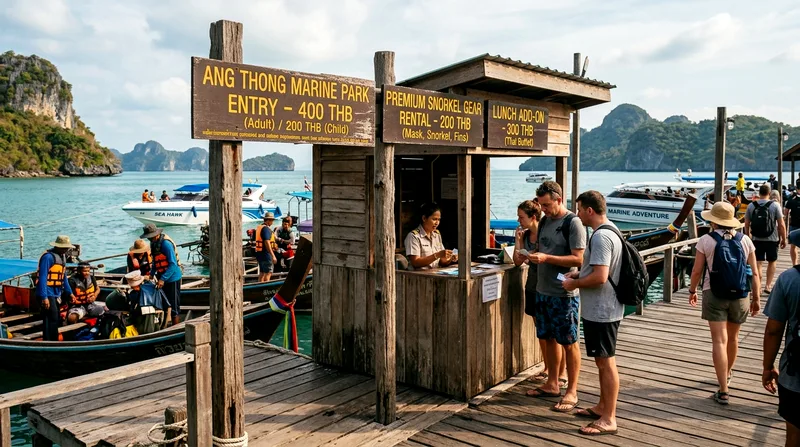
Samui boat tour book online vs street: compare pricing, cancellation rules, and availability to decide which booking method fits your trip.
Online Booking vs Street Purchase at a Glance
Every traveler landing in Ko Samui faces the same small decision within a day or two: book that Ang Thong Marine National Park trip or the Koh Tao and Koh Nang Yuan day cruise through a website, or just walk up to one of the stalls lining Chaweng Beach Road and Lamai's main strip. The Samui boat tour book online vs street question isn't really about which is "better" in the abstract — it's about what you're optimizing for on this particular trip.
Online platforms sell a fixed product at a fixed price, visible before you commit. Street vendors sell a conversation — the price moves depending on time of day, how many seats they need to fill, and how good you are at saying no and walking away. Both get you on a boat. They differ in who absorbs the risk when something changes.
I've watched both systems operate long enough to say neither is a scam by default, but each has a failure mode. Online platforms occasionally oversell group capacity on paper and consolidate you onto a different boat than advertised. Street vendors occasionally oversell confidence — telling you the trip is "confirmed" when it's actually contingent on filling six more seats by 7am.
How online platforms work
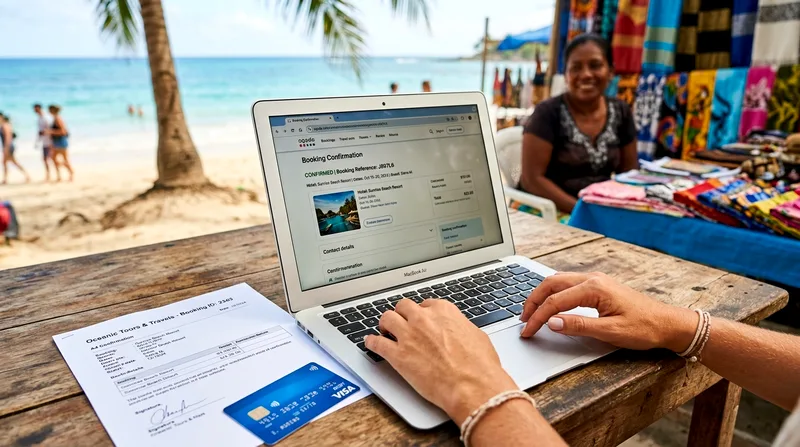
Online tour booking in Ko Samui runs through aggregator sites and operator-direct pages. You pick a date, pick a tour — Ang Thong by speedboat, a Koh Tao snorkeling run, a sunset cruise off Lamai — and pay by card or digital wallet before you leave your hotel room. The listing usually states inclusions (lunch, snorkel gear, national park fee, hotel pickup) explicitly, which matters because Ang Thong's park entrance fee (roughly 300 baht for adults, separate from the tour price on some listings) catches people out when it's not itemized. Confirmation arrives by email or app within minutes, often with a voucher number and a local contact. The transaction is traceable, which is the main thing you're paying for.
How street vendors operate
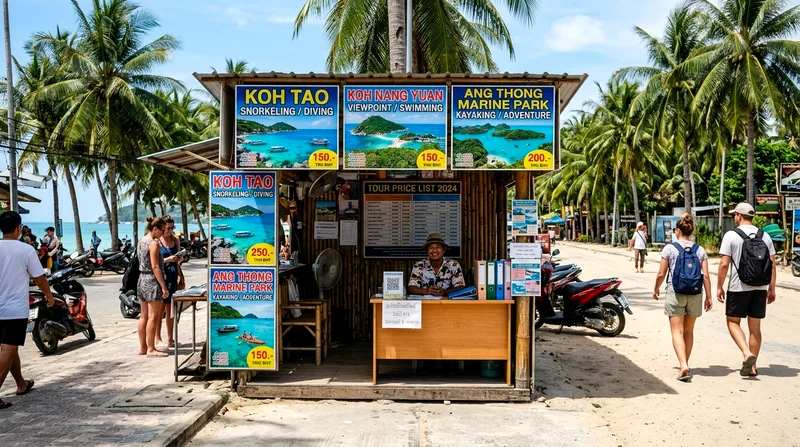
Street vendors — small booths and folding tables outside 7-Elevens, guesthouses, and dive shops along Chaweng and Lamai — work on a commission model, selling seats on boats run by local operators they have an informal or formal arrangement with. You negotiate face to face, pay cash, and get a handwritten or printed slip, sometimes just a scribbled time and a phone number. There's no app, no review history you can check independently, and the person selling you the ticket often isn't the person running the boat. That's not automatically bad — some of these booths have operated the same routes for over a decade — but it means your only recourse if something goes wrong is showing up at the same table the next morning and hoping they're still there.
Price: What You'll Actually Pay
Price is where most people start this comparison, and it's the most misleading factor if you look at it alone. A Koh Tao and Koh Nang Yuan day trip by speedboat from Samui might show online for somewhere in the 1,800–2,800 baht range per adult depending on boat type and season, while a street vendor in low season might quote 1,500 baht for the same route if boats are running under capacity and they need to fill seats. In high season — December through March, and again around Thai public holidays — that gap often reverses, because street vendors know foot traffic is high and price accordingly, sometimes above the online rate.
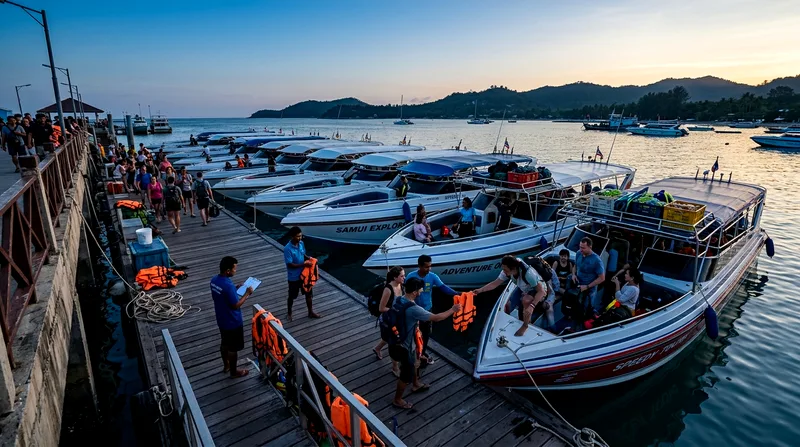
Online booking trades a small markup for price certainty and refund protection, while street purchase trades that certainty for negotiation room and cash savings in low season.
Samui boat tour book online vs street: price, flexibility and risk compared
| Booking Method | Typical Price vs Operator Rate | Payment | Cancellation Terms | Best For |
|---|---|---|---|---|
| Online platform | +10-20% markup | Card/digital, prepaid | Often free up to 24h before | Fixed dates, popular routes, peace of mind |
| Street vendor (high season) | At or above online price | Cash only | Informal, operator discretion | Rarely the better deal |
| Street vendor (low season) | -10-15% vs online | Cash only | Informal, operator discretion | Flexible travelers, confident negotiators |
| Hotel concierge referral | +15-25% markup | Card or cash via hotel | Varies by partner operator | Convenience over savings |
Figures are illustrative ranges based on general market patterns; always check current prices and terms before booking.
Online platform pricing structure
Online prices usually bake in a platform fee or markup of roughly 10–20% over what the operator would charge if you booked them directly. In exchange you get price transparency — the number you see is the number you pay, with taxes and inclusions spelled out — and the ability to compare five Ang Thong tours side by side before choosing. Group size tiers exist online too: private longtail charters cost dramatically more per head than joining a 30-person speedboat tour, and listings generally disclose group size upfront, which street boards rarely do with any precision.
Street vendor negotiation dynamics
Street pricing is elastic. Walk past the same Lamai Beach booth at 9am and 4pm and you'll hear two different numbers for the same Ang Thong trip tomorrow. Cash discounts of 10–15% off the posted board price are common if you're willing to ask, especially for groups of four or more. The catch: you're negotiating with someone whose job is to close the sale, not to disclose that the "VIP speedboat" is actually a 40-person boat with a different name on it. If you enjoy haggling and have a few days of slack in your schedule, you can genuinely do better than online. If you need the cheapest number right now with zero verification, you're gambling.
Cancellation Policies and Refund Protection
This is the category where the Samui beach tour cancellation policy question actually separates the two channels, and it's where I'd push most readers toward online booking regardless of the price gap. Weather cancellations happen often enough in Ko Samui — squalls roll through even in dry season, and Ang Thong tours get cancelled outright when seas are rough around the outer islands — that you should assume it could happen to you.
Online cancellation terms
Most reputable online platforms publish a cancellation window — commonly free cancellation up to 24 hours before departure, with partial or no refund inside that window. If the operator cancels due to weather, the standard practice is a full refund or a free rebooking to another date, stated in writing at the time of purchase. That paper trail matters: if a refund doesn't land in your account within the stated window (usually 5–10 business days), you have an email thread and a transaction ID to escalate with your card issuer. I'd avoid any online listing that doesn't state its weather-cancellation policy explicitly — if it's not on the page, assume it doesn't exist.
Street vendor flexibility
Street vendors can be more accommodating in the moment — a friendly vendor might just rebook you to tomorrow's departure with a handshake, no paperwork, no fee. But that flexibility is personal, not contractual. If the vendor's stall is closed when you come back, or if a different person is working it, your "agreement" from yesterday carries no weight. Refunds, when they happen, come out of the vendor's pocket in cash, which means some vendors simply won't offer one and will instead push you toward rebooking with them specifically — not necessarily the outcome you wanted.
Availability and Last-Minute Booking
Advance booking vs walk-in tours is really a question about how much certainty you need and how far ahead you're planning. Peak season — late December to early January, and the Songkran period in April — fills popular routes like Ang Thong and Koh Tao days out in advance, particularly for smaller boats and sunset cruises with limited capacity. Off-season, roughly May through October excluding occasional monsoon disruption, same-day walk-up availability is usually fine.
Advance booking guarantees
Booking online a few days ahead — or even a week ahead for Christmas and New Year dates — locks your seat and your price before demand pushes either against you. This matters most for families coordinating with young kids' nap schedules or flight connections, and for travelers who've built a tight itinerary across Samui, Koh Phangan, and the mainland. If your return flight is the next morning, I would not leave an Ang Thong trip to a walk-up gamble; book it online with hotel pickup confirmed at least 48 hours out.
Walk-in availability risks
Walking up the morning of works most of the time in low season, but "most of the time" isn't a guarantee you can plan a last day around. Street vendors will often tell you a tour is "confirmed" when what they mean is "likely to run if enough people show up by 7am" — and if it doesn't fill, you get rescheduled or refunded in cash, eating into your last day. Solo travelers and couples with flexible schedules can absorb that risk fine. Families with one shot at a specific day, or senior travelers who've built their trip around a single big-ticket excursion, generally can't.
Who Should Book Which Way
Families with children benefit most from online booking — confirmed pickup times, stated group sizes, and a cancellation policy you can rely on if a kid gets seasick-anxious the night before and you need to shift dates. Senior travelers should book online for the same reason, plus the ability to read exactly what's included (shade, toilet access, walking distances) before committing, rather than trusting a rushed sales pitch.
Solo travelers and couples with open schedules are the group best positioned to use street vendors well. You can afford to wait a day if a tour doesn't fill, you're not coordinating anyone else's nap schedule, and you likely have the time to walk two or three booths along Chaweng or Lamai and compare quotes before buying. European travelers used to fixed-price, consumer-protected booking systems at home often find the street negotiation process stressful rather than fun — if that's you, default online and skip the haggling entirely.
World travelers who've done this dance in Krabi, Phi Phi, or Phuket already know the pattern: street tourism economies in Thailand run on volume and relationships, and prices move with how empty the boats look that morning. If you've successfully haggled a longtail price down in Railay or a day-trip rate down near Ao Nang, you'll manage fine on Samui's streets too. If that's new to you, the online route removes the guesswork for a modest premium.
Hotel concierge desks are a third, often-overlooked channel — convenient, but they typically add a markup similar to or higher than online platforms without the price transparency, since many work on referral commission with a single preferred operator.
Final Verdict
Online booking wins on anything you can't afford to lose: a once-only Ang Thong Marine National Park day, a Koh Tao and Koh Nang Yuan trip squeezed into a short layover on Samui, or any departure during December–January and Songkran when boats fill. The markup — typically 10–20% over operator-direct or street-negotiated rates — buys a written cancellation policy, a traceable payment, and a seat that exists whether or not six strangers show up to fill the rest of the boat.
Street purchase wins when you're flexible, traveling solo or as a couple, and visiting in low season when boats run under capacity and vendors are motivated to deal. The savings are real — 10–15% off board price isn't unusual — but they come with zero contractual protection if weather, overbooking, or a vendor who's vanished the next morning gets in your way.
Compare current boat tours and prices before you book, and treat the street as a backup negotiation, not your primary plan, for anything involving Ang Thong or a long day trip toward Koh Tao.
Frequently asked questions
Is booking a Samui boat tour online cheaper than street vendors?
Not always. In low season, street vendors often beat online prices by 10–15% because they're motivated to fill boats. In high season — December–January, Songkran — street prices often match or exceed online rates since demand is high and vendors know it.
Can you cancel a boat tour booked online?
Most online platforms allow free cancellation up to 24 hours before departure, with reduced or no refund inside that window. Always check the specific listing's policy before paying — it should state the cutoff and refund timeline explicitly, usually 5–10 business days for processing.
What happens if you book a street tour and it rains?
It depends entirely on the vendor's goodwill, since there's usually no written contract. Many will rebook you for another day or refund in cash, but some simply won't, especially if the stall is run by a different person than the one who sold you the ticket.
Do online platforms guarantee better tour quality?
No — many online listings and street vendors sell seats on the same boats run by the same local operators. The quality difference is usually negligible; what you're actually paying for online is transparency, documentation, and refund recourse, not a better boat.
Can you negotiate prices with street tour vendors?
Yes, and it's expected, particularly for groups of four or more or when booking a day ahead rather than same-morning. A 10–15% discount off the posted board price is realistic in low season; expect little room to negotiate during peak holiday periods.