Samui private speedboat hire price by boat size and trip length, with real cost-saving strategies: group splitting, timing, and what to avoid.
Where Your Speedboat Hire Money Goes
Ask three operators in Ko Samui for a quote on the same route and you'll get three different numbers — sometimes 30-40% apart. That's not necessarily a scam. Private speedboat pricing is built from a handful of hard costs that shift daily, and understanding them is the only way to tell a fair quote from an inflated one.
The boat itself is almost a fixed cost once purchased. What varies trip to trip is fuel, which is priced in litres and distance, not in a flat "rental fee." A trip to Ang Thong Marine National Park, roughly 60km round-trip from Samui's north coast, burns noticeably more fuel than a short hop to Koh Tao's southern reefs or an inshore loop around Koh Phangan. Longer runs into the open Gulf of Thailand also mean more time at higher throttle, which matters because speedboats are fuel-hungry at cruising speed in a way slower long-tail boats aren't.
Crew costs come next — typically a captain and one or two deckhands, who are paid for the day regardless of guest numbers. Insurance, both for the vessel and passenger liability, adds a baseline cost operators build into every quote whether you notice it or not. I'd treat any quote that seems 20% below everyone else's with suspicion — it usually means a corner is being cut somewhere in that insurance or crew experience line, not that you've found a bargain.
Fuel, Crew, and Insurance
On a typical half-day private hire, fuel can represent 30-45% of the total price, depending on distance traveled. A short Koh Samui coastal run costs noticeably less in fuel than a full Ang Thong circuit or a Phang Nga Bay day trip (which, to be clear, is usually run from Phuket or Krabi, not Samui — if an operator offers it from Samui, expect a very long day and a steep fuel premium). Crew wages are a flatter cost: whether you book four people or ten, you're paying for the same two or three crew members, which is exactly why group splitting works so well on per-person economics. Insurance is the least visible cost but the one you most want present — ask directly whether passenger insurance is included, because some of the cheapest operators skip it.
Seasonal Demand and Location Premiums
Pricing moves with the calendar more than most travelers expect. December through March, Samui's high season, sees private speedboat rates climb because demand from both tourists and the family market peaks at once. The monsoon-influenced period around October-November can bring choppier seas on the Gulf side, and some operators either reduce trips or add a small weather-contingency buffer to quotes. Location matters too — hiring from Bophut or Maenam, closer to the main piers, tends to be marginally cheaper than hiring from a resort on the southern coast, simply because the boat doesn't burn fuel just getting to your pickup point.
Price Ranges by Boat Size and Duration
Speedboat hire prices in Ko Samui are usually quoted as a flat rate for the boat, not per person — which is exactly why group size is your biggest lever. Expect published rates to vary by season and route, so treat the figures below as a planning range rather than a fixed menu.
Per-person cost drops sharply as group size rises, which is the single biggest factor in private speedboat value.
Samui private speedboat hire price by boat size and trip length
| Boat Size | Typical Capacity | Half-Day Price Range (THB) | Full-Day Price Range (THB) | Best For |
|---|---|---|---|---|
| Small speedboat | 4–6 passengers | 8,000–14,000 | 14,000–22,000 | Couples, small families |
| Medium speedboat | 6–10 passengers | 13,000–20,000 | 22,000–32,000 | Groups, Ang Thong trips |
| Large speedboat | 10–15 passengers | 18,000–28,000 | 30,000–45,000 | Large groups, split costs |
Approximate ranges based on typical Samui operator pricing; always confirm current rates, fuel surcharges, and park fees before booking.
Small Speedboats (4–6 Passengers)
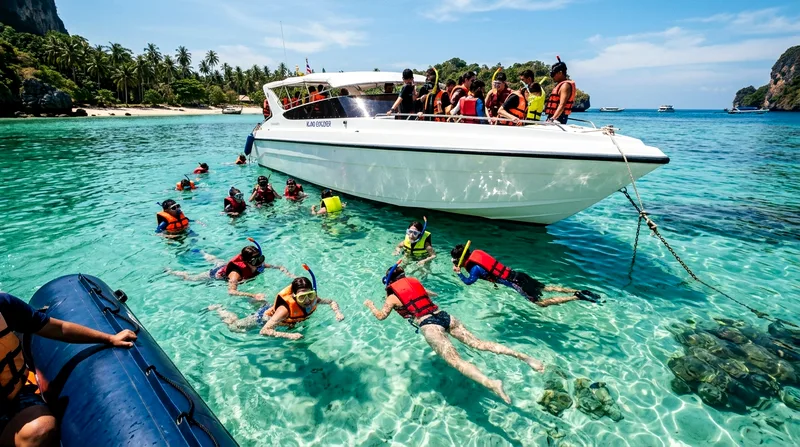
Smaller speedboats, generally seating four to six, are the entry point for private hire and suit couples or a single family. A half-day hire (around four hours) for a short route, say a nearby snorkeling spot or a loop toward Koh Phangan, commonly falls in the lower end of the private charter range. Full-day hire roughly doubles that, though not exactly, since fuel and crew costs don't scale linearly with a longer but less throttle-intensive day. This size boat is a poor fit for groups of eight or more — you'll either overcrowd it or need a second boat, which usually costs more than one medium-sized boat would.
Medium Speedboats (6–10 Passengers)
Medium speedboats, typically rated for six to ten passengers, are the sweet spot for most groups and families booking a private Ang Thong Marine Park trip or a Koh Tao day run. The flat rate sits meaningfully higher than the small-boat tier, but split across eight people it often comes out cheaper per head than a small boat split across four. This is the size where group sharing pays off most clearly — and it's also the size most commonly available for same-week booking, since operators run more of them than larger vessels.
Half-Day vs. Full-Day Rates
Half-day speedboat hire in Koh Samui — generally four to five hours — suits a single destination like a snorkeling bay or one island stop. Full-day hire, eight hours or more, makes sense for multi-stop itineraries: Ang Thong's several islands, or combining a Koh Phangan beach stop with snorkeling further out. Full-day rates aren't simply double the half-day price; expect somewhere between 1.6x and 1.9x, since the fixed crew and insurance costs don't double even though fuel and wear do. If your plan only needs three productive hours on the water, don't default to full-day "to be safe" — ask the operator what a half-day window realistically covers for your chosen route.
Smart Ways to Lower Per-Person Costs
The flat-rate pricing model that makes private speedboat hire feel expensive solo is exactly what makes it cheap in a group. A medium speedboat priced at 18,000 baht for the day sounds steep until you split it eight ways — then it's roughly 2,250 baht per person, often less than a seat on a shared tour to the same islands once you factor in flexibility.
Group Sharing and Split Bookings
If you're traveling as a couple or solo, the most effective savings move isn't negotiating the quote — it's finding travel companions. Some guesthouses and hostels in Chaweng or Lamai post shared private-boat trips on noticeboards or group chats, splitting a medium boat's flat rate among strangers heading to the same place. This gets you most of the flexibility of a private charter — choosing stops, skipping crowded bays — without paying for six empty seats. The trade-off: you lose some control over timing and stop selection once other people are involved, so agree on the itinerary before paying anyone.
Off-Season and Shoulder-Season Discounts
April, May, June, and September are generally quieter months for Samui tourism, and boat operators with idle capacity are more willing to negotiate a flat rate than during peak December-January weeks. You won't see an advertised "off-season discount," but asking directly — "is this your best rate for a Tuesday in May?" — often works better than it does in high season. Weather is the trade-off: shoulder months can bring sudden squalls, so build a flexible day into your itinerary rather than booking your only free day months in advance.
What's Worth Paying Extra For
Not every cost-cutting instinct serves you well here. Chasing the absolute lowest quote in a market where crew quality and equipment vary this much is how people end up with a leaking cooler box, a captain who doesn't know the reef entry points, or no life jackets in the right sizes for kids.
Safety Equipment and Crew Experience
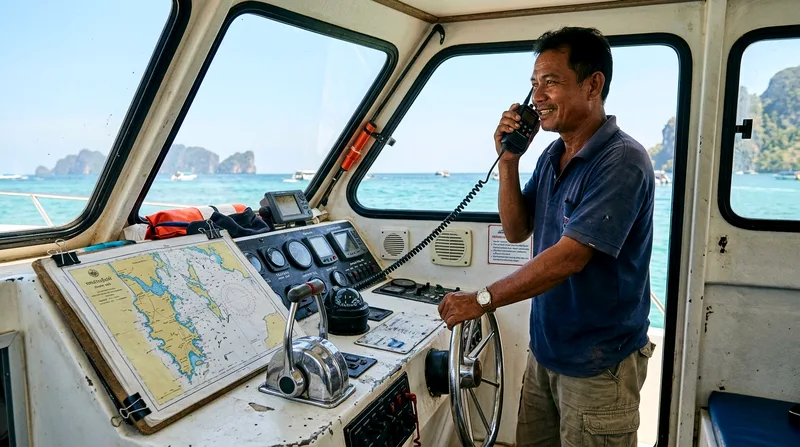
Ask specifically whether life jackets are provided in child sizes if you're traveling with children, and whether the boat carries a first-aid kit and working VHF radio or phone signal backup for open-water legs like the Ang Thong crossing. Experienced crew who know local conditions on the Gulf of Thailand side are worth a 10-15% premium over a bargain operator — sea conditions near Koh Tao and the outer Ang Thong islands can turn choppier than the sheltered Samui coastline, and a captain who reads that correctly matters more than it sounds.
Snorkeling Gear and Refreshments
Mask and fin rental is sometimes included, sometimes a 100-200 baht per person add-on — confirm which before you arrive at the pier, not after. The same goes for drinking water and fruit, standard on many trips but not universal. Paying a little more for a boat that includes decent snorkeling gear and basic refreshments usually beats the alternative: discovering on the water that you need to buy overpriced bottled water from the one shop on a tiny island stop.
Booking Checklist for Best Value
Booking ahead — ideally one to two weeks out in high season, a few days out in shoulder season — generally gets better boat availability and sometimes a better rate than last-minute pier bookings, where desperation pricing can go either way. Compare at least two or three quotes for the same route and boat size before committing; the spread is often wider than people expect.
Questions to Ask Before Booking
Confirm what's actually included: fuel, park entrance fees for Ang Thong Marine National Park (currently a separate national park fee per person, paid on top of the boat hire), snorkeling gear, and food. Ask about the cancellation policy for bad weather — reputable operators offer a reschedule or refund if seas are too rough, and you want that in writing or at least clearly stated before paying a deposit. Ask how many hours are actually on the water versus transit time, since a "full day" quote can sometimes include an hour of pickup and return transfers that eat into your island time. Finally, ask directly about fuel surcharges for longer routes — some operators quote a base price then add fuel separately for trips beyond a certain distance, which is the most common hidden fee in this market.
Frequently asked questions
What is included in a private speedboat hire price?
Typically the boat, captain, fuel, and basic safety equipment like life jackets. Snorkeling gear, drinking water, national park entrance fees (for trips to Ang Thong Marine National Park), and lunch are often separate — confirm each item before paying, since inclusions vary a lot between operators.
How much does it cost to hire a speedboat for a group?
A medium speedboat seating six to ten people typically runs 13,000-20,000 baht for a half-day or 22,000-32,000 baht for a full day, in Thai baht terms. Split across eight passengers, that's often 2,000-3,000 baht per person for a full day — cheaper per head than renting a small boat for a couple.
Are there discounts for booking during low season?
Not formal advertised discounts, but operators have more idle boats in April-June and September, so directly asking for their best rate on quieter weekdays often works. Expect more flexibility on price than during December-January peak season, when demand lets operators hold firm.
What hidden fees should I watch for?
Fuel surcharges for longer routes, national park fees added on top of the boat rate, equipment rental for snorkeling gear, and transfer time counted against your hired hours. Always ask for a single all-in quote in writing rather than a base rate with add-ons disclosed later.
Is it cheaper to book a speedboat tour or private hire?
A shared group tour is almost always cheaper per person for solo travelers or couples, since you're buying one seat rather than the whole boat. Private hire becomes competitive or cheaper once you have five or more people wanting the same route and timing, because the flat rate splits down close to shared-tour pricing while giving you full control of stops.