Planning a Samui catamaran sunset cruise? Here's what to expect — deck layout, drinks, snorkel stops, timing tips and what to pack before booking.
What Is a Samui Catamaran Sunset Cruise
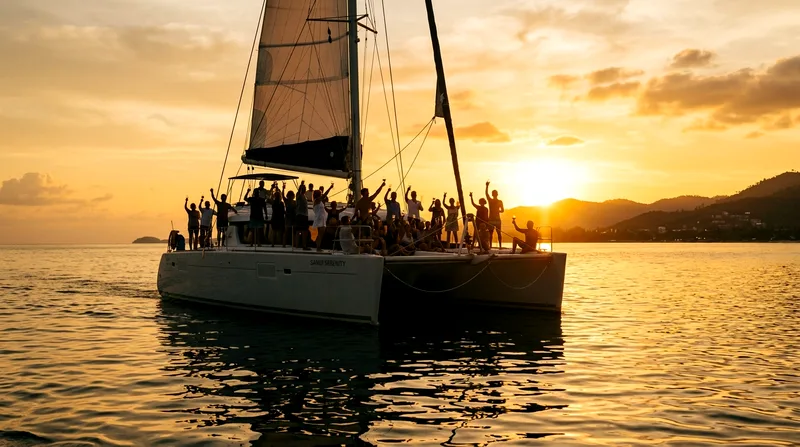
A Samui catamaran sunset cruise is a half-day or evening boat trip that sails out from Ko Samui on a twin-hulled sailing vessel, usually timed so the boat is on open water as the sun drops toward the Gulf of Thailand or the Andaman side horizon, depending on route. Most operators run one of two formats: a dedicated evening sunset sail of around 3 hours, or a longer afternoon-into-evening trip that adds a snorkel stop before anchoring for sunset. Boats like the vessels branded Red Baron and similar Samui Catamaran operations are the names most associated with this niche on the island, running fairly consistent itineraries from piers near Bophut or Maenam.
The appeal over a standard speedboat charter is comfort. Catamarans sit flatter on the water thanks to the dual-hull design, so there's less of the pounding and spray you get on a monohull speedboat doing 30 knots across choppy swell. You can stand up, walk around, and hold a drink without bracing yourself every few seconds.
A catamaran sunset cruise trades speed and reef variety for comfort and a relaxed social evening, unlike speedboat transfers or full-day island trips.
Samui catamaran sunset cruise vs other Ko Samui boat tour options
| Option | Typical Duration | Best For | Sea Comfort |
|---|---|---|---|
| Catamaran sunset cruise | 3-4 hours | Couples, photography, relaxed evening | High — stable dual-hull |
| Speedboat day trip (Koh Tao) | 8-10 hours | Serious snorkeling, divers | Moderate — choppier ride |
| Ang Thong Marine Park tour | Full day (8+ hours) | Scenery, kayaking, hiking | Moderate |
| Private longtail charter | 2-6 hours, flexible | Small groups, custom routes | Low to moderate |
| Island-hopping speedboat (Koh Phangan) | 6-8 hours | Beach-hopping, younger travelers | Moderate |
Durations and comfort levels are general patterns; always confirm the specific itinerary and boat type before booking.
Why choose a catamaran over speedboats
Speedboats win on raw travel time — a speedboat can reach Koh Tao or the outer islands in under an hour, where a catamaran might take two or three. But speed comes at a cost: hard bench seating, constant engine noise, and a bouncing ride that's rough on backs, knees, and anyone prone to motion sickness. A catamaran trades speed for stability and social space. There's usually a trampoline net at the bow, open deck seating, and enough width between hulls that the boat barely rocks even at anchor. If your priority is the sunset itself — the slow change of light, time to take photos, a drink in hand — the catamaran format fits that goal far better than a speedboat, which is built for point-to-point transfers rather than lingering.
Typical itinerary and duration
Expect a pier departure somewhere between 3:00 and 4:30 pm depending on the season and sunset time, with the boat back on land roughly three to four hours later. A typical run: boarding and safety briefing, a cruise out past Chaweng Beach or Lamai Beach on the east coast, a snorkel stop of 30 to 45 minutes at a reef site, then repositioning to open water for the sunset itself with drinks and music, followed by the return leg under deck lighting. Some itineraries swap the snorkel stop for a short stretch near a smaller island close to Ko Samui rather than venturing toward Ang Thong Marine National Park, which is really a full-day trip in its own right, not something bolted onto an evening sail.
Deck Layout and Onboard Experience
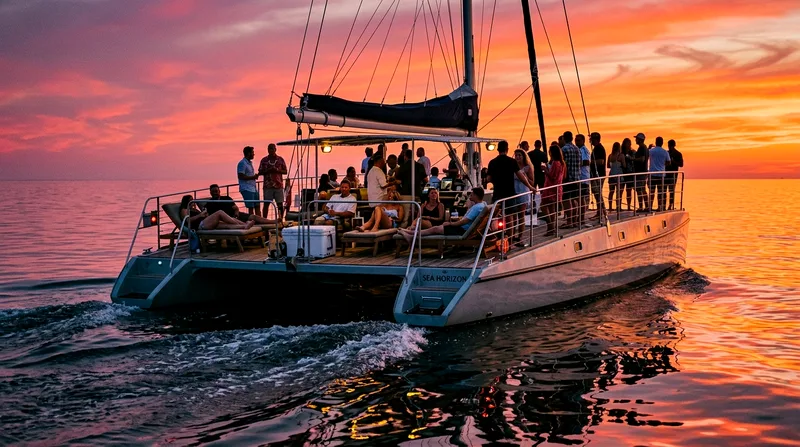
Most sunset catamarans running from Samui are in the 40 to 60-foot range, carrying anywhere from 20 to 50 passengers depending on the boat and operator. That passenger count matters more than people expect — a boat with 50 people on a 45-footer feels cramped by the time everyone's jockeying for a sunset photo spot, while a smaller group on the same boat feels spacious. If you're booking and the listing doesn't state capacity, it's worth asking before you pay, especially if you're traveling with young children who'll want room to move.
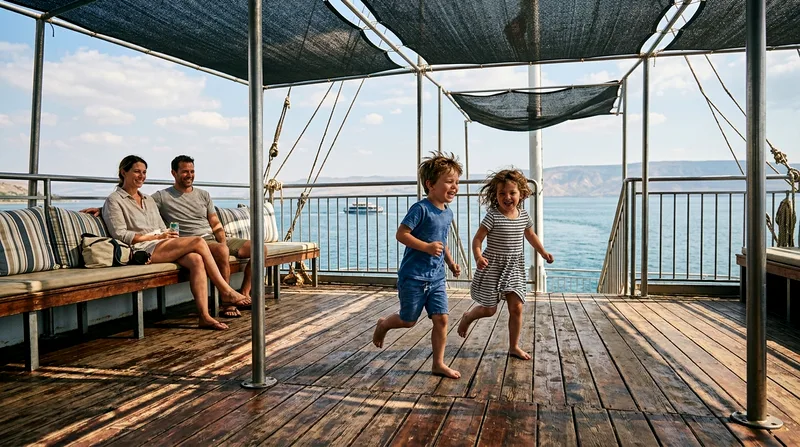
The mood onboard is intentionally casual — barefoot, music playing, no assigned seating beyond the dining area. That's part of the charm for couples and solo travelers, less so if you're the type who wants a fixed, quiet spot for the whole three hours.
Upper and lower deck features
The upper deck, sometimes called the flybridge, is where most people end up for sunset — open air, unobstructed horizon views, and usually where the bar or a drinks station is set up. It gets more exposed to wind and sun earlier in the trip, so bring a layer for later. The lower deck, closer to the waterline, usually has shaded bench seating and sometimes an interior cabin with tables, useful if you need to get out of direct sun or if a child needs a nap. The bow trampoline nets are popular for lying down and feeling the spray, but they're not ideal for anyone with mobility issues or a bad back — getting up off a net while the boat is moving takes some balance.
Seating and photo vantage points
For photography, the stern (back) of the upper deck usually gives the cleanest unobstructed shot west, since the mast and rigging can cut into the frame if you're shooting from mid-boat. Arrive at your chosen spot 15 to 20 minutes before actual sunset — the best color often happens just after the sun dips, not while it's still visible, and that's exactly when everyone else moves to grab a railing spot too. A wide-angle phone lens handles the scene fine; you don't need a proper camera, though a lens cloth is useful since sea spray gets on everything.
Drinks Package and Dining Options
Nearly every Samui catamaran sunset cruise sold as "all-inclusive" bundles soft drinks, water, and some level of alcohol into the ticket price — but the actual pour varies a lot between operators, so this is one area worth reading the fine print on before you book. Some include unlimited beer, wine, and a house spirit for the full three hours; others cap it at two or three drinks per person before charging for extras. Neither approach is wrong, but know which you're buying.
Included beverages and bar service
Standard inclusions are Thai beer (usually Chang or Singha), a basic red or white wine, soft drinks, and bottled water. Spirits, if included, tend to be limited to rum, vodka, or whisky mixed into simple cocktails rather than a full cocktail menu. If you're a wine drinker expecting anything beyond a basic house pour, lower your expectations — this isn't a wine cruise. Self-serve bars are common on the bigger boats; smaller operations have a crew member mixing drinks at a fixed station, which can mean a short wait during the sunset rush when everyone wants a refill at once.
Food offerings and dietary options
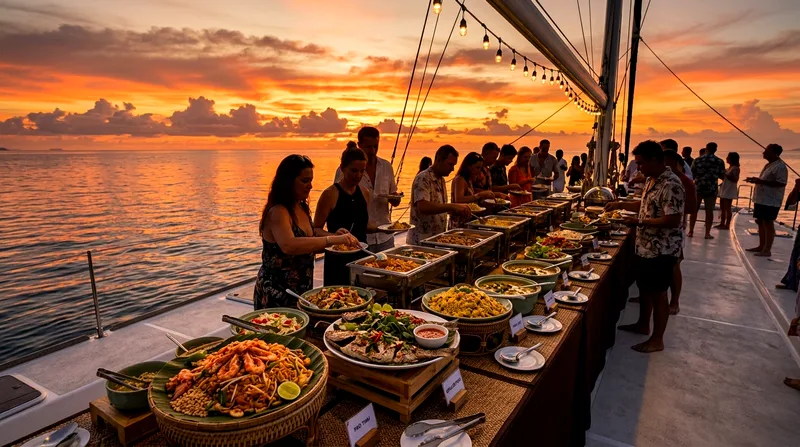
Food is typically a buffet-style spread of Thai dishes — pad thai, fried rice, spring rolls, grilled chicken or fish, fresh fruit — served after the snorkel stop or around sunset. It's casual, not fine dining, and portions are generally fine for a light dinner, not a feast. Vegetarian options are usually available without pre-arrangement since Thai buffets lean vegetable-heavy anyway, but if you have a specific allergy (shellfish, peanuts, gluten), message the operator directly before the trip rather than assuming the crew can accommodate on the spot.
Snorkel Stops and Water Activities
The snorkel segment is usually the shortest part of the day, and you should treat it as a bonus rather than the main event — if serious snorkeling is your priority, a dedicated day trip to Koh Tao or Ang Thong Marine National Park will beat anything squeezed into a sunset itinerary. That said, the stop is a nice break from sitting, and the water around Samui's smaller satellite islands is generally clear enough for decent visibility outside the monsoon months.
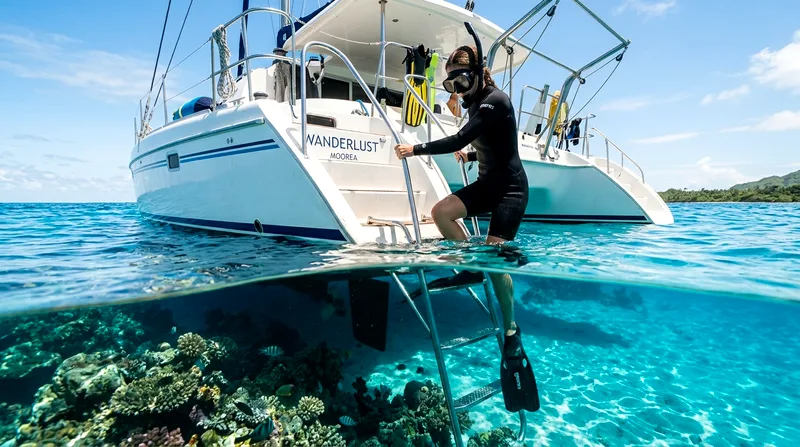
Popular snorkel sites and marine life
Common stops are the shallow reef patches around small islets a short sail from Samui, rather than the more dramatic sites near Koh Tao or Koh Phangan, which are too far for a same-evening round trip. Expect to see parrotfish, damselfish, the occasional small reef shark in deeper water, and soft coral rather than the hard coral gardens you'd find further out in the Andaman Sea. It's a gentler introduction to Thai reef life, good for nervous swimmers and kids, less exciting for anyone who's already snorkeled Phi Phi or the Similan Islands and knows what more remote sites look like.
Safety equipment and instruction
Masks, snorkels, and life vests are standard inclusions, and crew will usually do a short briefing before anyone goes in the water — where the boundaries are, how to signal if you need help, and where the ladder is for getting back aboard. Life vests are generally mandatory for non-confident swimmers, and crew do keep an eye on the group from the deck. If you have ear problems or are a genuinely weak swimmer, say so before you get in — the water at these stops is usually calm but can still have a mild current near the boat.
Best Time to Book and What to Bring
Booking a Samui catamaran sunset cruise works best when timed to both season and sunset hour, since the itinerary is built entirely around daylight.
Seasonal weather and sea conditions
The dry season, roughly December through March, gives the calmest seas and most reliable sunsets, though skies can occasionally be hazy. April to June is hot but generally still good for boat tours. The southwest monsoon, from around July through October, brings rougher seas and a higher chance of cancellation or a rerouted itinerary — this is the period when it's worth checking cancellation policy closely, since catamarans, despite being more stable than speedboats, still won't run in genuinely rough swell. November can be transitional and unpredictable. Compare this to Phuket or Krabi on the Andaman side, where the monsoon pattern runs roughly opposite — something worth knowing if you're island-hopping and trying to dodge bad weather by switching coasts.
Packing essentials for comfort
Bring a light layer for the wind once the sun goes down, reef-safe sunscreen, a swimsuit under your clothes to save changing time, a dry bag or ziplock for your phone, and motion sickness tablets if you're at all prone to it — take them before boarding, not after you start feeling off. Skip heavy jewelry and anything you'd be upset to lose over the side. Flip-flops or barefoot is the norm; closed shoes aren't necessary and most people leave them in a bag below deck.
Nearby Add-Ons and Extensions
A sunset cruise is a self-contained evening, but it's worth thinking about what comes before and after if you want to build a fuller day around it rather than just the three hours on the water.
Island hopping combinations
Some operators offer a combined day where morning and early afternoon are spent on a longer island-hopping route — sometimes toward Koh Phangan or smaller islands near Samui — before transitioning into the sunset leg later in the day. This is a different product from Ang Thong Marine National Park day trips, which run as their own full-day excursions and don't typically combine with a sunset sail on the same day given the distance involved. If you want both Ang Thong and a sunset cruise, plan them as two separate trips on different days rather than hoping to find a combo.
Pre- and post-cruise activities
Piers near Bophut and Maenam are close to Fisherman's Village, a reasonable spot for an early dinner or a drink if your cruise lands you back on shore around 7 or 8 pm and you're not ready to end the evening. Families based around Chaweng Beach or Lamai Beach should factor in a 20 to 40 minute transfer to the departure pier — confirm whether that transfer is included in your booking, since some listings price it separately.
Frequently asked questions
What is included in a catamaran sunset cruise?
Most packages include return transfer from major Ko Samui beaches, soft drinks and a set level of alcohol (usually beer, wine, and a basic spirit), a buffet-style Thai dinner or snacks, snorkel gear for the water stop, and life vests. Check the listing closely, since the amount of included alcohol and whether transfer is bundled varies by operator.
Do I need swimming or snorkeling experience?
No prior experience is required. Life vests are provided for anyone unsure in the water, and the snorkel stop is usually in calm, shallow water close to the boat. Weak swimmers should tell crew before entering the water so they can keep a closer eye and offer a vest without being asked twice.
What should I wear on a sunset cruise?
Wear your swimsuit under light, breathable clothing, bring a layer for after sunset when the wind picks up, and go barefoot or in flip-flops. Skip anything you'd regret losing overboard, and bring reef-safe sunscreen rather than standard sunscreen for the snorkel stop.
How long does a typical cruise last?
Most sunset cruises run three to four hours total, departing in the mid-to-late afternoon and returning after dark once the boat is lit up for the ride back to the pier. Combined itineraries with extra island stops can run longer, closer to five or six hours.
Can I book a private catamaran charter?
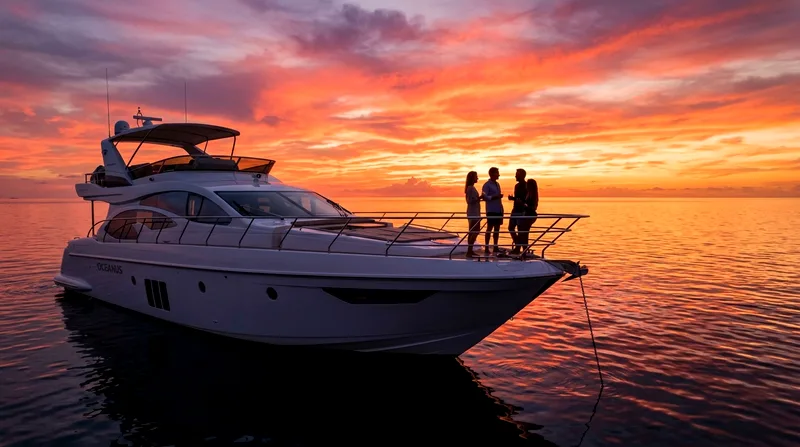
Yes, private charters are available on Samui, typically priced per boat rather than per person, which makes sense for groups of eight or more but gets expensive fast for couples or solo travelers. Compare the per-person cost against a shared sunset cruise before committing, since a private charter can run several times the price for a similar itinerary.