Samui boat tour seniors guide: stable vessels, easy boarding, shorter routes. Comfort and safety tips for choosing the right trip before you book.
Which Boat Tours Suit Senior Travellers
A Samui boat tour for seniors works best when it trades speed and distance for stability and shade. That's the honest trade-off: the fastest, most photogenic trips to places like the Ang Thong Marine National Park often involve open-water crossings, bouncing speedboats, and long days in the sun — none of which suit someone with back problems, balance issues, or a pacemaker that doesn't love sudden jolts.
The better starting point is Samui Bay itself and the sheltered water between Ko Samui and Koh Phangan. These routes stay closer to shore, the swell is generally lower, and crews tend to know the water well enough to avoid rough patches. Trips toward Koh Tao are longer and more exposed — fine for an active retiree who swims and dives, less fine for someone who just wants a calm few hours on the water with lunch included.
I'd steer most senior travellers away from any tour described as "adventure," "adrenaline," or "extreme" — these words usually mean open-sea speedboat runs with hard seating and minimal shade. Instead, look for words like "cruise," "sightseeing," or "sunset" in the tour description; they tend to signal a gentler pace and a boat built for comfort rather than speed.
Calm-Water Bay Tours vs Open-Sea Routes
Bay tours around Samui and the stretch toward Koh Phangan stay within sight of land for most of the journey, which matters more than people expect — being able to see the shoreline reduces anxiety and often reduces seasickness too, since your eyes have a fixed point of reference. Open-sea routes, like the longer runs out to Koh Tao or the far side of Ang Thong, cross genuinely open water for 45 minutes to over an hour each way, and conditions can shift fast even when the morning looked calm. For seniors, a bay tour of two to four hours is a safer bet than a full-day open-water circuit, even if the open-water trip promises better snorkeling or scenery.
Half-Day vs Full-Day Sailing Options
Half-day tours, typically three to four hours, are the sensible default for most senior travellers — enough time to see a bay, stop for a swim or a walk, and get back before fatigue sets in. Full-day tours, often seven to eight hours including a lunch stop, sound better value per hour but pack in more sun exposure, more boat movement, and less flexibility to just leave early if someone feels unwell. If you do want a full-day trip to somewhere like Ang Thong, check that there's shaded seating throughout and that the itinerary includes real rest stops, not just one 20-minute beach break squeezed between two hours of travel.
Main Boat Tour Categories Compared
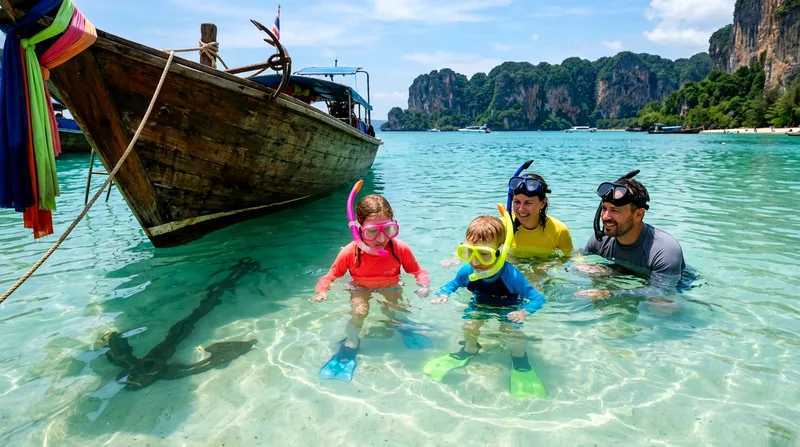
Ko Samui's boat tour market splits into a handful of recognizable categories, and each one suits a different kind of senior traveller. Big catamarans and larger day-cruise boats tend to be the most stable and the easiest to walk around on, with proper railings, toilets, and sometimes even air-conditioned cabins. Traditional longtail boats are smaller, more charming, and fine for short, calm hops — but they sit low in the water, have minimal shade, and boarding often means a wobbly step rather than a ramp.
Speedboats are the category I'd flag most carefully. They're fast, which sounds appealing for a shorter day, but "fast" means hard impacts on choppy water and a seating position where you absorb every bump through your lower back. For a senior with hip or spine issues, 45 minutes on a speedboat in moderate swell can be genuinely uncomfortable, even painful. A bigger, slower boat covering the same route in 90 minutes is usually the better choice, even though the itinerary looks longer on paper.
Private charters sit apart from all of this. They cost more — often several times the per-person price of a group tour — but they let you set the pace, choose calmer sub-routes, and turn back early without feeling you've ruined anyone else's day.
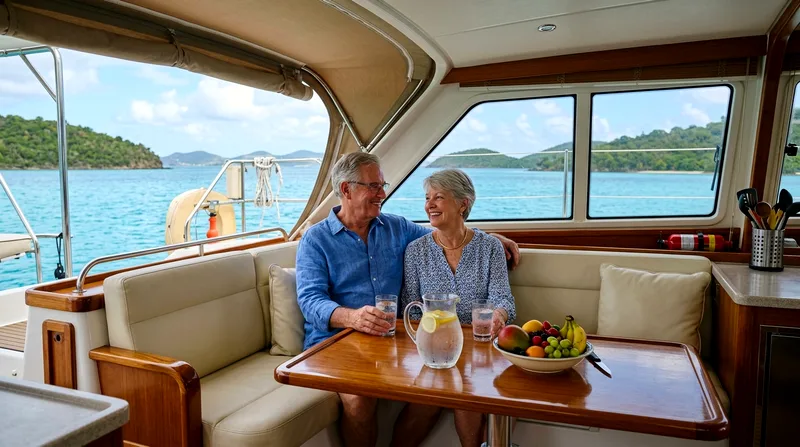
Larger, slower vessels on shorter bay routes are generally the most comfortable and accessible choice for seniors.
Samui boat tour categories compared for senior travellers
| Boat Type | Typical Duration | Group Size | Stability | Best For |
|---|---|---|---|---|
| Catamaran / day cruiser | 3-8 hours | 30-80 passengers | High | Seniors, families, longer routes |
| Traditional longtail | 1-3 hours | 2-10 passengers | Low | Short, calm, sheltered hops |
| Speedboat | 1-5 hours | 10-25 passengers | Low to moderate | Faster transfers, active travellers |
| Private charter boat | Flexible, 2-8 hours | 2-12 passengers | Varies by boat | Custom pace, mobility needs |
Typical figures based on common Ko Samui tour formats; always confirm vessel type, capacity, and boarding method with the operator before booking.
Speedboat vs Traditional Longtail Boats
Speedboats win on time: a trip to Ang Thong that takes a large boat two hours might take a speedboat under an hour. But they ride low, bounce hard, and usually have bench seating with little back support — manageable for 20 minutes, tiring after an hour. Longtail boats are slower and more traditional, charming for short scenic routes around Samui Bay, but they're narrow, have a low freeboard (the gap between water and deck), and boarding usually means stepping down into the hull rather than walking across a stable platform. For seniors, a mid-sized boat — bigger than a longtail, slower than a speedboat — is usually the sweet spot, though it's a less common category and you may need to ask operators directly what vessel they use.
Group Tours vs Private Charters
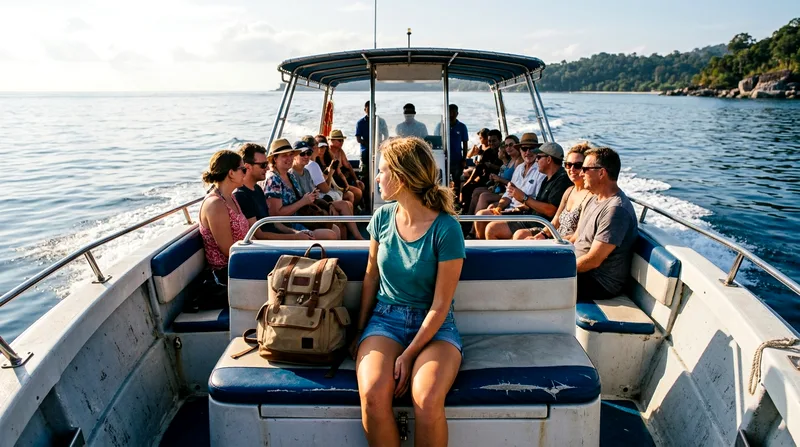
Group tours are cheaper and run on fixed schedules, which suits travellers who want a known price and don't mind sharing the boat with 15 to 40 other people. The downside for seniors is pace — the itinerary is fixed, bathroom breaks happen on the group's schedule, not yours, and crew attention is split across everyone onboard. Private charters flip that: you set the stops, the speed, and the duration, and crew attention is focused on your group alone. For a senior traveller with specific needs — a slower pace, more frequent stops, help getting on and off the boat — the extra cost of a private charter is often worth it, particularly for a special occasion like a family trip with grandchildren.
What to Look for When Booking
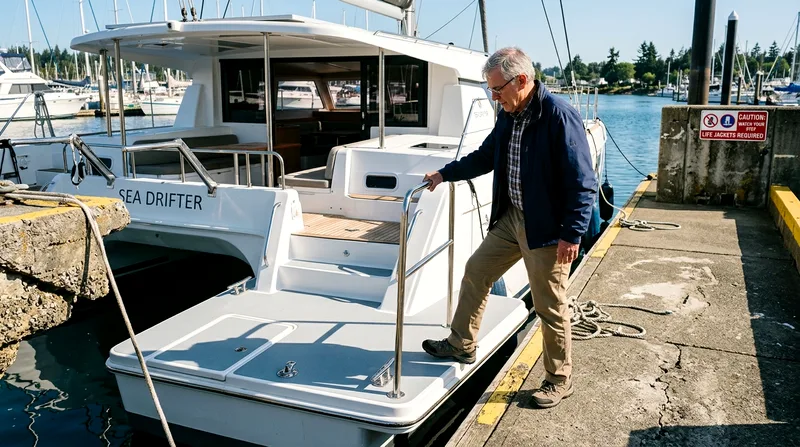
Tour descriptions rarely mention accessibility in any useful detail, so you often have to ask directly or dig through photos and reviews. The two things that matter most are how stable the boat actually is in the water and how you get on and off it — everything else is secondary.
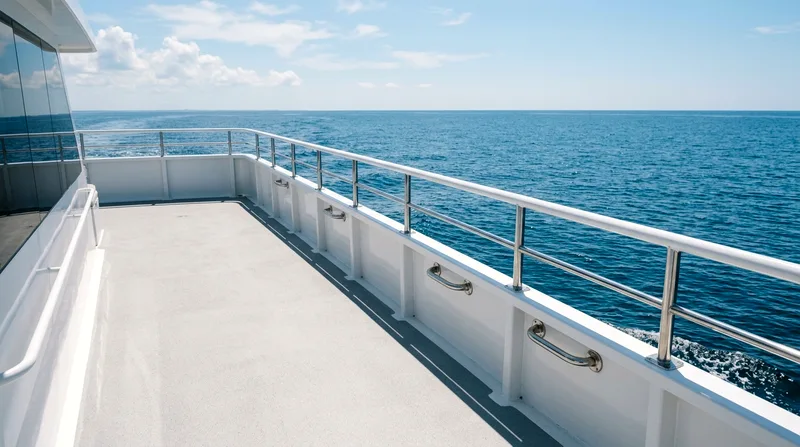
Don't take "comfortable seating" at face value. Photos in listings are often taken on calm days with an empty boat; ask, in a message before booking, whether there are cushioned seats with backrests, shaded areas, and railings along the walking paths. A boat with open deck space and no handholds is a fall risk the moment there's any wake from a passing vessel.
Vessel Stability and Passenger Capacity
Bigger generally means steadier. A catamaran or double-hulled day-cruise boat carrying 40-80 passengers will roll far less than a longtail carrying eight. Passenger capacity also affects how crowded the walkways get — a packed 60-person boat can mean queuing to move between deck areas, which isn't ideal if you're unsteady on your feet. Look for boats explicitly described as catamarans or "stable cruisers" rather than speedboats or longtails, and if the listing doesn't specify, ask the operator what vessel runs that particular route — it can vary by day and by season.
Boarding Accessibility and Onboard Facilities
Boarding is where many otherwise good tours fall down. Some piers around Ko Samui have proper gangways or ramps; others require stepping from a floating dock directly onto a boat deck that's rising and falling with the swell. If mobility is a real concern, ask specifically whether boarding uses a ramp or steps, and whether crew assist passengers physically — most do, but it's worth confirming rather than assuming. Onboard, check for a working toilet (not all smaller boats have one), shade structures rather than just a canvas awning that disappears by midday, and drinking water included rather than sold separately. Few Samui boats carry onboard medical facilities beyond a basic first aid kit, so anyone with a serious condition should carry their own medication and inform the crew before departure.
Best Times to Book Your Tour
Timing affects comfort on a Samui boat tour more than most people realize — not just when you book, but when in the year you travel and how far ahead you commit.
Seasonal Weather and Sea Conditions
The Gulf of Thailand around Ko Samui is generally calmest from roughly December through April, when the northeast monsoon has eased and before the heavier rains arrive later in the year. Many operators pause or shorten routes to Ang Thong Marine National Park or Koh Tao during the wetter months, roughly October through December, when swells pick up and some boats simply don't run. For a senior traveller prioritizing a smooth ride over anything else, booking in the first few months of the year gives the best odds of flat water — though no season guarantees it, and even a good-weather forecast can produce an uncomfortable afternoon swell.
Advance Booking for Group Discounts
Group boat tours often offer modest discounts for booking several days ahead, and some operators reduce rates for groups of four or more — useful if you're travelling with family. Booking ahead also gives you time to ask questions about boat type and accessibility rather than making a rushed decision at a pier-side kiosk, which is where mismatched expectations happen most often. The trade-off is flexibility: a tour booked and paid for a week out is harder to cancel if the weather forecast turns bad close to your date, so check the cancellation policy — most reputable operators offer a full refund or reschedule for weather cancellations, but it's worth confirming before you pay, especially for a private charter where deposits can be nonrefundable.
Safety and Comfort Tips for Seniors
Seasickness is the most common complaint on Samui boat tours, and it's largely preventable. Taking motion sickness medication 30-60 minutes before departure works better than waiting until you feel unwell, and sitting toward the middle or back of the boat — away from the bow, where pitching is most pronounced — helps considerably on choppier routes.
Dress for sun and spray rather than style: a wide-brimmed hat that won't blow off, light long sleeves, and proper closed-toe sandals rather than flip-flops, which slip easily on wet decks. Bring more water than you think you'll need; shade on smaller boats is often inconsistent, and dehydration sneaks up fast in Samui's heat, particularly between March and May.
Compare this to Phuket or Krabi, where many boat tours to the Phi Phi Islands or Similan Islands involve longer open-water transfers and larger crowds — Samui's routes to Koh Phangan and Ang Thong tend to be shorter and calmer by comparison, which works in favor of senior travellers. Koh Lanta's boat trips, by contrast, often involve rougher Andaman crossings that I wouldn't recommend for anyone sensitive to motion.
One thing I wouldn't do: book the cheapest speedboat combo tour you find without reading recent reviews specifically for boat condition and crew helpfulness. Price often tracks directly with vessel age and crew training, and a cut-rate tour is where boarding assistance and shade are most likely to be missing.
Frequently asked questions
Are speedboats or longtail boats better for seniors?
Neither is ideal compared to a larger catamaran, but if you must choose, a longtail on a short, sheltered route beats a speedboat on open water. Speedboats hit swell harder and faster, straining backs and hips; longtails are slower but have lower, less stable decks and trickier boarding. For longer distances, push operators for a mid-sized or catamaran option instead.
What should seniors wear on a Ko Samui boat tour?
Wear closed-toe sandals with grip, light breathable clothing that covers shoulders, and a secured hat rather than a loose sun hat. Avoid flip-flops and smooth-soled shoes — wet decks get slippery fast, and that's where falls happen.
How long do most senior-friendly boat tours last?
Most comfortable options run three to four hours as a half-day bay tour, which covers Samui Bay or a short hop toward Koh Phangan without excessive sun exposure. Full-day trips to Ang Thong typically run seven to eight hours and are more demanding, so reserve those for travellers in good physical condition.
What accessibility features should I check before booking?
Ask specifically about boarding — ramp versus steps — plus railings along walkways, cushioned seating with backrests, shaded deck space, and whether there's an onboard toilet. Listings rarely state these details clearly, so message the operator directly before paying.
Can seniors with mobility issues join boat tours?
Yes, but a private charter is usually the safer route — crew can tailor boarding assistance and pacing to one group rather than managing 40 passengers on a fixed schedule. For group tours, choose larger boats with proper gangways and confirm crew will physically assist boarding and disembarking.