Samui speedboat vs catamaran vs longtail compared: speed, comfort, cost, and seasickness risk, so you book the right boat tour for your trip.
The Three Boat Types at a Glance
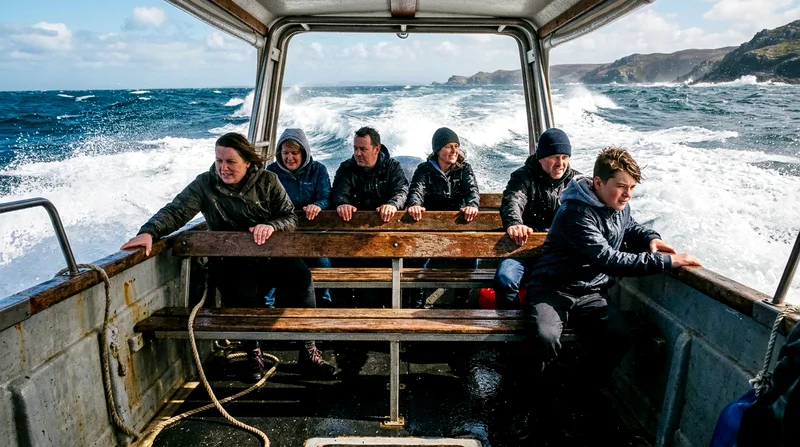
Ko Samui's boat tour market runs on three very different vessels, and the Samui speedboat vs catamaran question is really the first decision most travelers face before they even look at itineraries. Add the longtail boat into the mix and you've got three distinct experiences, not just three price points. Each one changes how your day feels, not just how fast you get there.
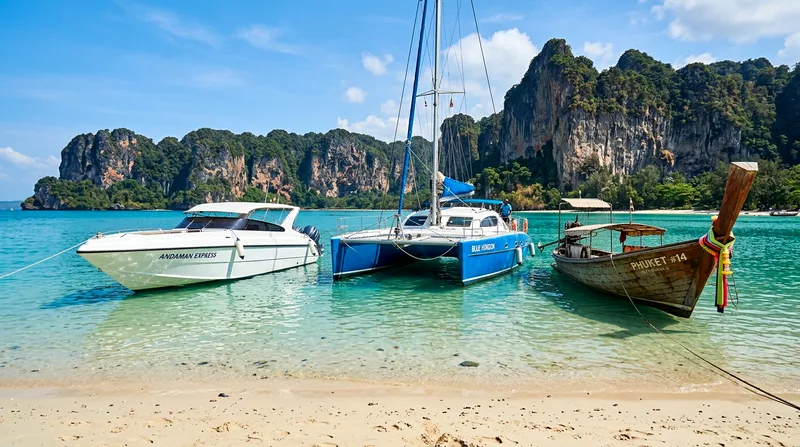
Speedboats dominate the Ang Thong Marine National Park and Koh Tao day-trip market because they cut travel time dramatically. Catamarans show up more on full-day group tours, sunset cruises, and snorkeling trips where the boat itself is part of the experience, not just transport. Longtail boats are the local workhorses — short hops to nearby islands, fishing-village style transfers, and some budget snorkeling trips around Koh Phangan's coastline or Samui's own bays.
None of the three is objectively "best." A speedboat that's perfect for a solo traveler chasing a tight schedule to Koh Tao can be a bad call for a family with a seasick seven-year-old. A catamaran that feels luxurious for a honeymoon couple might feel slow and overpriced to a backpacker who just wants to snorkel for two hours. Treat this as a matching exercise, not a ranking.
Speedboat overview
A typical Samui speedboat tour seats anywhere from 15 to 40 passengers, powered by twin outboard engines that push cruising speeds of 30-40 knots. These are the vessels doing the Ang Thong Marine National Park runs and the Koh Tao snorkeling circuits, usually leaving Samui or Bophut pier early — often 7:30-8:00am — to beat the afternoon chop in the Gulf of Thailand. They're built for distance-in-a-day, not comfort-in-a-day.
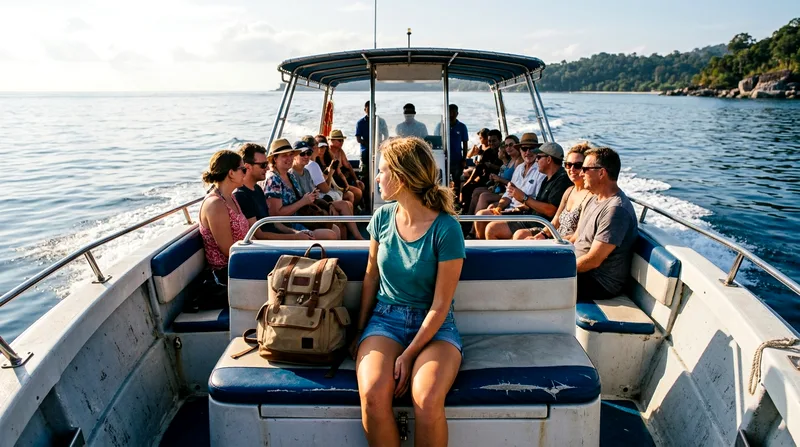
The trade-off is obvious once you're on board: hard plastic or thin-cushioned bench seating, exposed spray on the sides, and a hull that slaps against waves rather than riding over them. Fine for 45 minutes. Less fine for the 1.5-2 hours it can take to reach Koh Tao one-way.
Catamaran overview
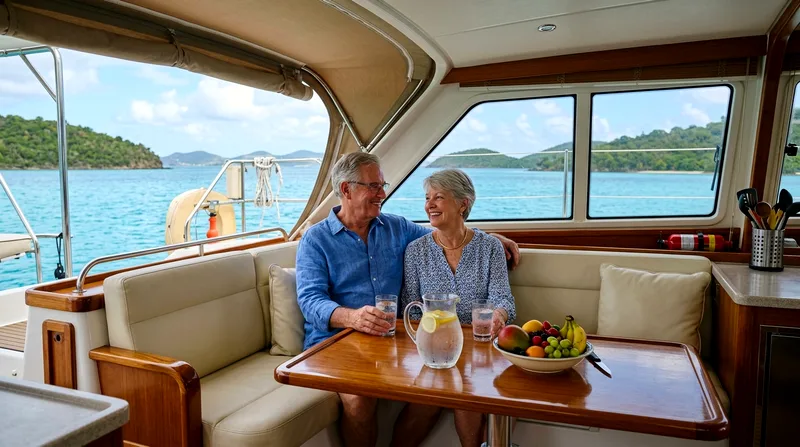
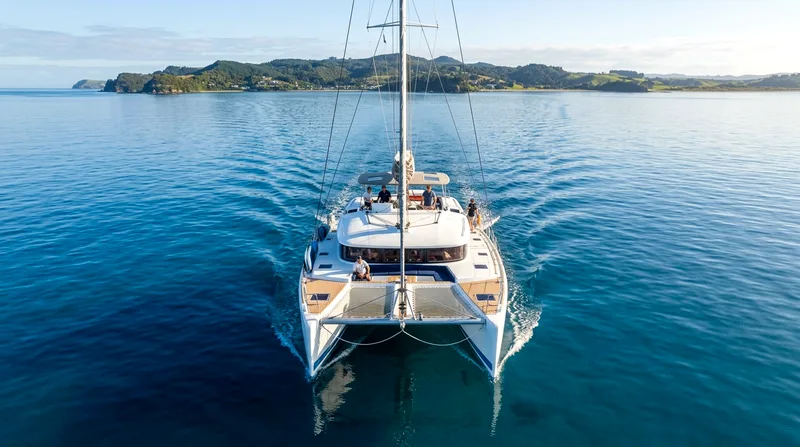
Catamarans use twin hulls, which is the whole reason they're in this comparison at all — that design resists the rocking motion single-hull boats get in choppy water. Samui catamaran trips tend to carry larger groups, sometimes 40-80 passengers on the bigger sailing or motor-cats used for Ang Thong day trips and sunset cruises. Decks are wider, there's usually a shaded saloon, sun loungers, and a proper toilet — something you won't find on most speedboats or longtails.
Cruising speed is noticeably slower, typically 12-20 knots under engine, which means a catamaran trip to Ang Thong can take 1.5-2 hours compared to roughly 45-60 minutes on a speedboat covering the same stretch. You're trading time for comfort, and on a full-day itinerary that time difference matters less than it sounds.
Longtail overview
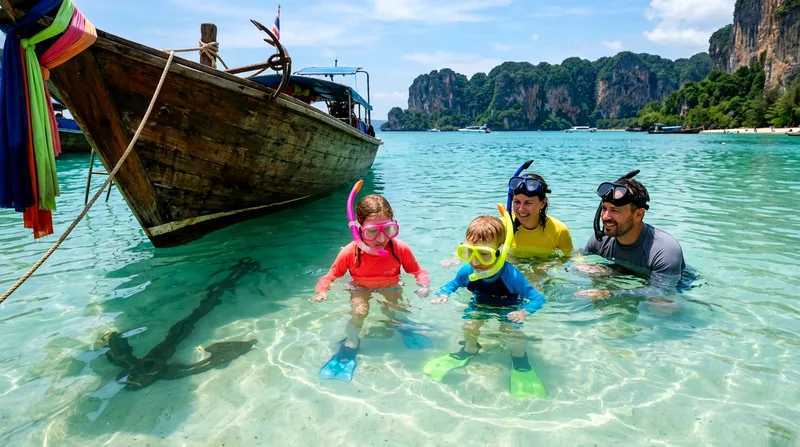
The traditional Thai longtail — recognizable by its long propeller shaft angled off the back — is the smallest and simplest of the three, usually carrying 6-15 passengers. You'll see them used for short transfers around Samui's own coastline, hops to nearby islets, and some budget operators running snorkeling stops near Koh Phangan's southern coast. Top speed rarely exceeds 15-20 knots, and there's no cabin, no shade structure beyond a basic canopy, and minimal seating padding.
They're not built for the open crossings to Koh Tao or deep into Ang Thong's outer islands — sea conditions there can get rough for a boat this light. Where they do well is calm, sheltered water close to shore, and a far lower price tag than the other two options.
Speed and Travel Time Compared
For island hopping specifically — Samui to Koh Tao, Samui to Ang Thong, or multi-stop days — the speedboat wins on raw numbers every time. Samui to Koh Tao by speedboat runs roughly 1.5 hours one-way; the same route by larger ferry or catamaran-style vessel can take 2.5-3 hours. Ang Thong is reachable from Samui in under an hour by speedboat versus closer to 1.5-2 hours by catamaran.
That speed advantage compounds on multi-island days. If you're trying to see Ang Thong's lagoon, do a snorkel stop, and get back before dark, a speedboat buys you an extra hour or two of actual island time rather than transit time. Compare that to Phuket's day-trip boats to the Similan Islands, which cover similar or longer distances and almost universally use speedboats for exactly this reason — the Similans are simply too far for anything slower to be practical in a single day.
Fastest option for island hopping
For island hopping specifically — Samui to Koh Tao, Samui to Ang Thong, or multi-stop days — the speedboat wins on raw numbers every time. Samui to Koh Tao by speedboat runs roughly 1.5 hours one-way; the same route by larger ferry or catamaran-style vessel can take 2.5-3 hours. Ang Thong is reachable from Samui in under an hour by speedboat versus closer to 1.5-2 hours by catamaran.
That speed advantage compounds on multi-island days. If you're trying to see Ang Thong's lagoon, do a snorkel stop, and get back before dark, a speedboat buys you an extra hour or two of actual island time rather than transit time. Compare that to Phuket's day-trip boats to the Similan Islands, which cover similar or longer distances and almost universally use speedboats for exactly this reason — the Similans are simply too far for anything slower to be practical in a single day.
Comfort, Capacity, and Seasickness Risk
Seasickness is the most underrated factor in this whole decision, and it's where the Samui speedboat vs catamaran comparison gets genuinely practical rather than just about preference. The Gulf of Thailand is usually calm April through September but can throw up short, choppy swells during the monsoon shoulder months of October to December — exactly when a speedboat's hard-slapping ride becomes a problem for anyone prone to motion sickness.
Stability and passenger comfort
Catamarans are the clear winner for comfort. The twin-hull design physically resists the side-to-side roll that causes most seasickness, and the wider deck means less of the up-and-down slamming you get on a speedboat punching through swell. If you've ever been queasy on a ferry in Krabi or a long-tail crossing near Koh Lanta, a catamaran is the boat type most likely to spare you a repeat experience.
Speedboats are the worst offenders for seasickness, not because of the speed itself but because of the impact — hitting wave troughs at 30+ knots creates a jarring, unpredictable motion that hits your inner ear harder than a slow rolling swell. Longtails sit in between: slow enough to avoid the jarring, but low in the water and prone to side rocking in anything beyond flat conditions. I'd avoid longtails for anyone with known motion sickness if the forecast shows wind.
Group size and deck space
Deck space scales roughly with hull size. A longtail's 6-15 passenger capacity means almost no room to move once everyone's seated — fine for a 20-minute hop, cramped for anything longer. Speedboats carrying 15-40 people usually have one central aisle and fixed bench rows, so you're stuck wherever you sit for the whole ride. Catamarans, with their 40-80 passenger range and open deck layout, let people spread out, stand at the rail, or retreat to shade — a real advantage on a full-day Ang Thong trip where you're on board for several hours total, not just in transit.
For families, that extra space isn't a luxury — it's what keeps a bored six-year-old from turning into a problem forty minutes from shore.
Cost and Value Breakdown
Price tracks roughly with comfort and group size, though not perfectly — a private speedboat charter can cost far more than a seat on a shared catamaran, while a shared longtail trip can be nearly as cheap as sharing a tuk-tuk fare. What you're actually paying for is exclusivity and speed on one end, and shared-group economics on the other.
Speedboats win on speed, catamarans win on comfort and group size, and longtails win on price for short local trips.
Samui speedboat vs catamaran vs longtail boat tours compared
| Vessel | Typical Speed | Passenger Capacity | Seasickness Risk | Typical Cost (per person) | Best For |
|---|---|---|---|---|---|
| Speedboat | 30-40 knots | 15-40 | High | 1,800-3,500 THB | Fast island hopping, tight schedules |
| Catamaran | 12-20 knots | 40-80 | Low | 1,500-3,000 THB | Full-day trips, families, groups |
| Longtail | 10-20 knots | 6-15 | Moderate | 300-800 THB (short trips) | Short hops, budget travel, calm water |
Figures are typical ranges based on common vessel specs and published tour patterns; always check current prices and conditions when booking.
Price range by vessel type
As a rough guide — and you should always check current prices when booking, since fuel costs and seasonal demand shift these — shared speedboat day trips to Ang Thong or Koh Tao typically run somewhere in the 1,800-3,500 THB per person range. Shared catamaran day trips, often bundled with lunch, snorkeling gear, and sometimes a sunset add-on, tend to sit in a similar or slightly lower 1,500-3,000 THB bracket, with the value boosted by the longer time on board and extras included. Longtail trips, especially short local hops rather than full day tours, can run as low as 300-800 THB for a short transfer, though full snorkeling itineraries on a longtail cost more.
Private charters flip this entirely — a private speedboat for a small group can cost several times a shared seat, but if you're a family of five or six, splitting that charter may land close to what you'd pay for individual catamaran seats anyway. Always compare the per-person math before assuming "private" means "expensive."
Who Should Book Which Boat
There's no universal answer here, and anyone telling you one boat type is right for everyone hasn't actually sat through a choppy crossing on the wrong one. Match the boat to your group, your tolerance for motion, and how much of the day you want to spend in transit versus on an island.
Best for thrill-seekers
If you want the wind-in-your-face, skipping-across-waves experience, book the speedboat. Solo travelers and younger couples tend to enjoy this most — it's genuinely fun in calm conditions, and the time saved means more hours actually snorkeling or exploring Ang Thong's lagoon rather than sitting in transit. Just go in knowing the ride itself is part of the thrill, for better or worse, and that's not everyone's idea of a good time on a stomach that's had breakfast.
Best for families and groups
Catamarans are the better call for families with children, senior travelers, and larger groups booking together. The stable ride, shaded seating, onboard toilet, and room to move make a 6-8 hour day trip bearable rather than an endurance test. European travelers used to ferry comfort standards back home will generally find catamarans the more familiar, less jarring experience compared to a speedboat.
Best for budget travelers
If cost matters more than comfort or speed, longtails win for short, local trips — a quick hop to a nearby snorkel spot or a transfer that doesn't require crossing open water toward Koh Tao. They're not the right choice for a full Ang Thong circuit or anything requiring a long open-water run; save that ambition for a catamaran or speedboat and use longtails for the shorter, cheaper legs of a trip.
Final Verdict
Choose based on what you're actually optimizing for, because none of these three boats does everything well. Speedboats win on speed and suit solo travelers, couples, and anyone with a tight schedule chasing Koh Tao or a fast Ang Thong loop — but they're the hardest on a sensitive stomach and the least comfortable for a full day. Catamarans win on comfort and group logistics, making them the better pick for families, senior travellers, and anyone booking a full-day Ang Thong Marine National Park trip where hours on board add up. Longtails win on price and local character for short, sheltered-water hops, but they're the wrong tool for long crossings or rough-season conditions.
If you're comparing Samui against other Thai boat-tour regions, the calculus shifts slightly — Phuket's Similan Islands trips lean almost entirely speedboat because of distance, while Krabi and the Phi Phi Islands run a heavier mix of longtails for short reef stops alongside speedboats for the longer legs. Samui's relatively calm, sheltered Gulf waters give catamarans more of a fair shot than they'd get on Thailand's more exposed Andaman coast. Compare current boat tours and prices before you book, and weigh the vessel type as seriously as the itinerary itself.
Frequently asked questions
Which boat is fastest for island hopping?
Speedboats are fastest by a clear margin, cruising at 30-40 knots versus 12-20 for catamarans and 10-20 for longtails. On the Samui-to-Koh Tao route, that's roughly 1.5 hours by speedboat versus 2.5-3 hours on slower vessels — a meaningful difference if your day trip has multiple stops.
Do speedboats cause more seasickness?
Generally yes. The jarring impact of hitting waves at high speed affects the inner ear more than the gentler rolling motion of a catamaran or the slower pace of a longtail. If you're prone to motion sickness, a catamaran's twin-hull stability is the safer bet, especially during the choppier October-to-December period.
What's the price difference between boat types?
Shared speedboat tours typically run 1,800-3,500 THB per person, shared catamaran day trips 1,500-3,000 THB (often with lunch and gear included), and short local longtail trips as low as 300-800 THB. Full-day longtail snorkeling itineraries cost more than a quick transfer, so compare the specific itinerary, not just the vessel type.
Which boat fits the most passengers?
Catamarans carry the most, typically 40-80 passengers on the larger vessels used for Ang Thong day trips and sunset cruises. Speedboats usually hold 15-40, and longtails are the smallest at 6-15 — a factor that matters for deck space as much as group size.
Is a longtail boat safe for tourists?
Yes, for their intended use — short trips in calm, sheltered water close to shore. They're not designed for long open-water crossings to Koh Tao or the outer Ang Thong islands, especially in rough conditions, so stick to operators using longtails for short local hops rather than full-day open-sea itineraries.