Samui to Koh Tao ferry vs tour compared: costs, travel time, piers, and snorkeling access explained so you can book the right option.
Ferry vs Tour Boat: Quick Comparison
The Samui to Koh Tao ferry vs tour decision comes down to one question: are you trying to get somewhere, or trying to experience something? A public ferry is transport — point A to point B, no frills, you handle the rest yourself. A guided boat tour is a packaged day out, built around snorkeling stops, lunch, and a guide who handles the logistics while you sit back.
Both depart from Koh Samui's northern piers, both take roughly similar time on the water, and both can be booked the same day in low season. Beyond that, they diverge fast. The ferry runs on a fixed timetable regardless of who shows up; the tour boat is scheduled around snorkeling time and group pacing, which means more flexibility in some ways and less in others — you don't choose when to leave, but you don't need to self-navigate either.
I'd lean toward the tour for first-timers who have one day only and want to see Koh Tao's reefs without arranging gear, a dive shop, or a boat charter themselves. I'd lean toward the ferry for anyone staying overnight on Koh Tao, since there's no reason to pay for snorkeling inclusions you won't use that day.
The ferry is cheaper and better for multi-day stays, while the guided tour is built for a single snorkeling-focused day trip.
Samui to Koh Tao ferry vs tour: cost, time, and access compared
| Option | Typical one-way cost (THB) | Crossing time | Snorkeling included | Best for |
|---|---|---|---|---|
| Public ferry (Lomprayah, Songserm) | 400-700 | 1.5-2 hrs | No | Multi-day stays, budget travel |
| Guided tour boat (day trip) | 1,800-3,500 (return, all-inclusive) | 1.5-2 hrs each way | Yes, 2-4 stops | Single-day snorkeling trips |
| Ferry + independent snorkel day | 700-1,200 total | Full day used | Arranged on arrival | Independent travelers with time to spare |
| Private longtail charter from Koh Tao | 1,500-3,000 (boat, split among group) | Flexible | Yes, self-directed | Small groups wanting custom stops |
Figures are typical ranges and vary by season, operator, and group size — check current prices and schedules before booking.
Public ferry overview
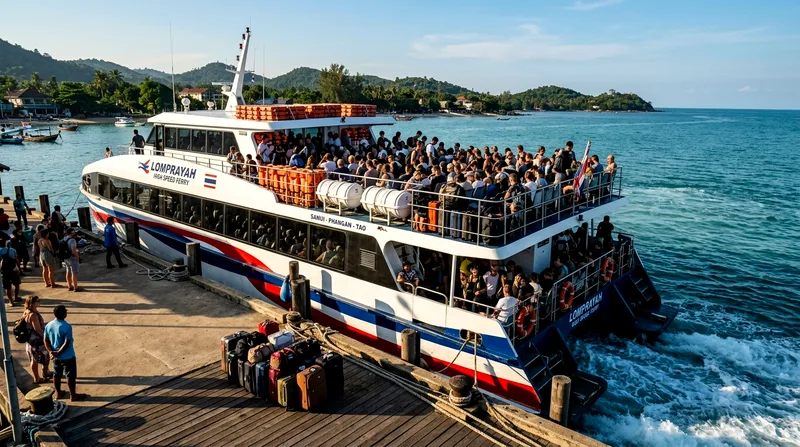
Operators like Lomprayah High Speed Catamaran and Songserm Express run scheduled services connecting Koh Samui, Koh Phangan, and Koh Tao, usually with one or two daily departures each direction depending on season. Lomprayah tends to run from Mae Nam Pier or Nathan Pier; Songserm and similar operators often use Nathan Pier or Bangrak Pier, so check which pier your ticket specifies — turning up at the wrong one is a common, entirely avoidable mistake. Crossing time is typically in the 1.5 to 2 hour range depending on the operator and whether Koh Phangan is a stop along the way. Tickets can be booked through aggregator sites like Directferries or directly through operator counters on Samui, and walk-up tickets are usually available outside peak holiday weeks.
Guided tour boat overview
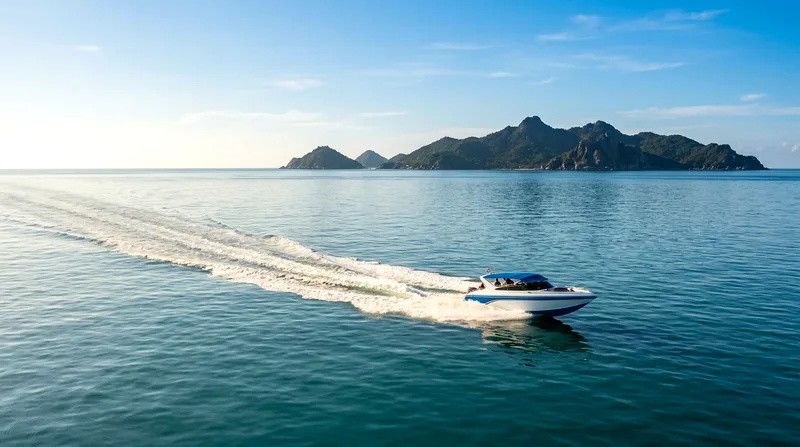
Guided boat tours to Koh Tao, often sold through local agents or platforms like Samui.Tours, combine the sea crossing with a structured day: usually two to four snorkeling stops around Koh Tao and sometimes Koh Nang Yuan, a lunch stop, and a fixed return time in the late afternoon. Boats are smaller than the ferries — speedboats carrying 20 to 40 passengers rather than catamarans carrying hundreds — and the itinerary is built entirely around the marine stops rather than getting passengers to Koh Tao town quickly. You're not visiting Koh Tao's main pier area at all in most cases; you're visiting its surrounding reefs.
Cost, Time, and Effort Breakdown
Money and time don't always trade off the way you'd expect on this route. The ferry is cheaper per leg but requires you to arrange everything else — transport to the pier, lunch, any snorkeling gear, and a plan for what to do once you land in Koh Tao's Mae Haad pier area. The tour bundles all of that into one price, which can end up similar in total cost once you add up what an independent day would actually require.
Effort is the bigger differentiator. A ferry trip means checking a timetable, getting to the correct pier 30-45 minutes early, handling your own onward transport on Koh Tao, and reversing all of it for the return leg. A tour means someone picks you up from many Samui hotels, puts you on the boat, and hands you a schedule you don't have to think about. For travelers who find holiday logistics stressful — and plenty do — that's worth paying for.
Ferry pricing and booking
One-way ferry fares between Samui and Koh Tao typically fall in the 400-700 THB range depending on operator and season, with round-trip fares costing roughly double minus a small discount on some routes. Advance booking isn't usually necessary outside of Songkran, New Year, or the Full Moon Party weeks on neighboring Koh Phangan, when boats fill up and prices firm up. Booking a day or two ahead online through the operator or an aggregator avoids the risk of a sold-out sailing, and it's the only way to guarantee a specific departure time rather than whatever's left at the counter.
Tour boat pricing and inclusions
Guided day tours from Samui to Koh Tao generally run higher — commonly in the 1,800-3,500 THB range per person — but that figure usually includes return transport, snorkeling equipment, lunch, soft drinks, and hotel pickup. Compare that to cobbling together a ferry fare, a rental mask and snorkel, lunch at Koh Tao prices, and a longtail charter to reach the better reef spots independently, and the gap narrows. The tour price is fixed and known in advance; the independent route has more variables, which is either an advantage or a risk depending on how much you like planning.
Snorkeling Access and Activities
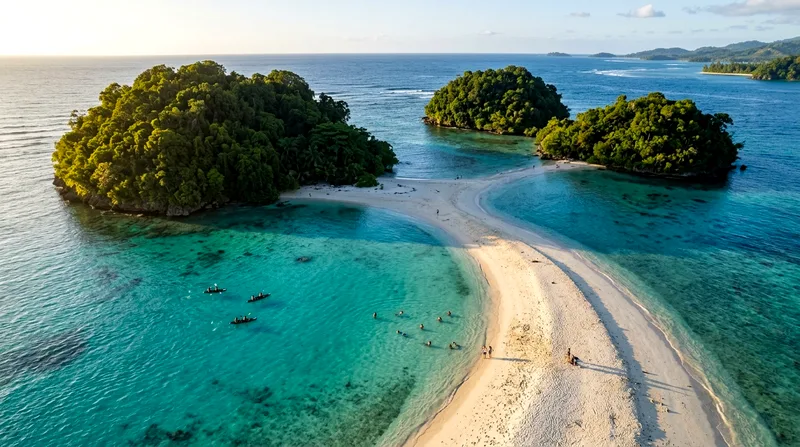
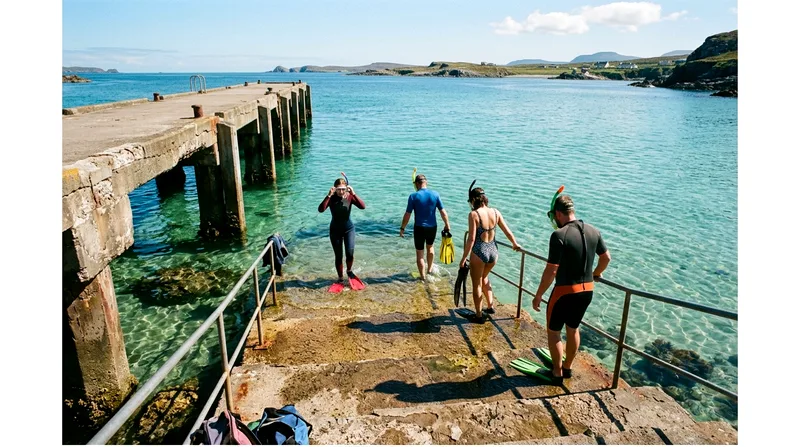
This is where the Samui to Koh Tao ferry vs tour choice really matters, because the two options give you fundamentally different access to the water. Koh Tao's reputation rests on its reefs — Japanese Garden, Shark Bay, the waters around Koh Nang Yuan — and none of those are walkable from the main pier. Getting to them requires a boat, gear, and ideally some local knowledge of where the visibility and coral are best that day.
Ferry passengers: independent snorkeling
If you take the ferry, you land at Mae Haad pier with no snorkeling access built in. You'd need to walk into town, rent gear, and either join a local snorkeling trip on Koh Tao itself or charter a longtail boat for a few hours — both very doable, and often cheaper on Koh Tao than booking from Samui, but it eats into your day. For a single day trip, this usually isn't worth the time cost; it works better if you're staying overnight on Koh Tao and have a second day to sort it out at a more relaxed pace.
Tour boats: guided marine experiences
Guided tours build snorkeling directly into the schedule, typically with a guide who knows which spots have decent visibility that week — a real advantage, since Koh Tao's water clarity varies with season and recent weather. Gear is provided, usually a mask, snorkel, and sometimes fins, though quality varies and I wouldn't expect dive-shop-grade equipment. Some tours also stop at Koh Nang Yuan, the small twin-bay island near Koh Tao, which independent ferry travelers rarely bother reaching on a single-day budget. The trade-off is you're on the group's schedule — if you want an extra 20 minutes at one reef, you generally don't get it.
Crowds, Comfort, and Seasickness
Neither option guarantees a smooth ride — this stretch of the Gulf of Thailand can get choppy, particularly from June through October — but the boats handle it differently, and that matters more than people expect until they're mid-crossing.
Ferry capacity and passenger volume
High-speed catamarans like those Lomprayah operates carry several hundred passengers, with assigned or semi-assigned seating, air conditioning, and enough mass to ride out moderate swell more steadily than a small boat would. The trade-off is crowding: during peak season, expect a full boat, queues at boarding, and limited deck space. It's a reasonably comfortable way to cross if you're not picky about elbow room, and the size genuinely helps with motion sickness compared to smaller vessels.
Tour boat comfort and sea conditions
Tour speedboats are smaller and sit lower in the water, which means more noticeable movement on rough days and less shelter if it rains. Groups are smaller too — usually under 40 people — so it feels less crowded, but there's often less covered seating area than on a full ferry. If you're prone to seasickness, take medication in advance regardless of which option you pick, but lean toward the ferry on days with a forecast swell, and avoid the very back of a small speedboat where engine fumes and bouncing are both worse.
Who Should Choose Which Option
There's no universally correct answer here — it depends on your itinerary shape. Someone spending three nights on Koh Tao has a completely different calculation than someone based on Samui for a week who wants one day of reef time.
Best for budget travelers
If you're staying on Koh Tao for two or more nights, or you're backpacking between Koh Samui, Koh Phangan, and Koh Tao as part of a wider Gulf islands route, the ferry is the obvious pick. Book directly or through Directferries, pick a morning departure to leave buffer time, and sort snorkeling once you've arrived and can compare local operators on Koh Tao itself, where competition keeps prices lower than Samui-based add-ons. This is also the right call for solo travelers comfortable navigating piers and schedules alone.
Best for convenience seekers
Families with children, couples on a short Samui holiday, and senior travelers who'd rather not manage pier transfers and gear rental should book a guided tour. The fixed itinerary, included lunch, and hotel pickup remove nearly every friction point, and the snorkeling stops are chosen by someone who actually knows the current conditions — not guessed from a guidebook. The cost premium over a DIY ferry day buys you time and certainty, which for a one-day trip squeezed between other Samui plans is usually worth it. Compare current boat tours and prices before you book, since availability and inclusions shift by season.
Frequently asked questions
How long does the ferry take from Koh Samui to Koh Tao?
Most direct ferry services take roughly 1.5 to 2 hours, depending on the operator and whether the boat stops at Koh Phangan en route. Lomprayah's high-speed catamarans tend toward the faster end; slower vessels or ones making multiple stops can take closer to 2.5 hours. Always check whether your ticket is a direct sailing or one with an intermediate stop before assuming the shorter time.
Which ferry operators run this route?
Lomprayah High Speed Catamaran and Songserm Express are the two most established operators connecting Koh Samui and Koh Tao, usually departing from Nathan Pier, Mae Nam Pier, or Bangrak Pier depending on the company and season. Smaller operators also run the route at times, and schedules consolidate or expand seasonally, so confirm the current pier and departure time when booking rather than relying on older timetables.
What is the cost difference between ferry and guided tour?
A one-way public ferry ticket typically costs 400-700 THB, while an all-inclusive guided day tour with snorkeling, lunch, and hotel transfer usually runs 1,800-3,500 THB per person. The gap shrinks once you add gear rental, lunch, and a local snorkeling boat to an independent ferry trip, so the tour isn't necessarily the "expensive" option once equivalent inclusions are counted.
Which pier should you depart from in Koh Samui?
It depends on your operator — Lomprayah commonly uses Mae Nam Pier or Nathan Pier, while Songserm and others often use Nathan Pier or Bangrak Pier. Your ticket confirmation will state the exact pier; don't assume based on previous trips, since operators occasionally shift piers by season. Arrive 30-45 minutes before departure to allow for check-in and boarding.
Is a day trip to Koh Tao worth it?
Yes, if snorkeling is your priority and you book a guided tour that includes the reef stops — you'll get several hours in the water without managing logistics. It's less worth it if you take the plain ferry with no plan, since you'll spend much of the day on transport and arranging gear on arrival, leaving little real time at the reefs before the return sailing.